

Choosing a medical bag starts with the actual loadout and where it will be used—not the advertised capacity alone. A bag that holds every item may still be the wrong carrier if it cannot open in the available space, makes frequently needed supplies difficult to reach, or is cumbersome when fully loaded. Compare usable space, access, organization, and carry before choosing a format.
Photos show example configurations. Check the selected product’s included-items list to confirm which carrier components and medical supplies come with it.
Before comparing models, answer five questions:
- Contents: What needs to fit inside, including any organizers or equipment?
- Access: Can you see and reach those items without unpacking the whole bag?
- Organization: How will you separate, identify, and secure the contents?
- Carry and storage: Will the bag travel with a person, stay in a vehicle, or serve a fixed location?
- Purchase scope: Do you need an empty carrier or a complete medical kit with listed supplies?
Those answers will help you narrow the choice from a compact medical pouch to a hand-carried bag, medical backpack, or protective case.
Already know the format you need? Browse Medical Packs to compare bags, packs, pouches, and cases.
Start with what the bag needs to carry
Begin with the inventory, then choose the carrier. A focused set of supplies and a larger team inventory can require very different amounts of space and organization.
If you already have supplies, lay them out with their packaging and any pouches or modules you plan to use. Identify the largest items, the groups you want to keep together, and anything that needs a dedicated compartment. Include the organizers themselves when estimating space.
When comparing bags, check:
- Usable dimensions: Check whether published measurements describe the exterior or usable compartments. If an item will be a close fit, confirm the compartment dimensions and opening size before choosing the bag.
- Loaded weight: Consider the combined weight of the carrier, supplies, and accessories.
- Room to organize: Contents should fit without making closures difficult or burying one group beneath another.
- Storage requirements: Confirm that the intended location and carrier are appropriate for the contents’ labeled storage conditions.
When you can inspect a sample, pack the intended inventory and check that the bag closes normally and the items you plan to access remain reachable. A larger bag offers more potential capacity, but it also takes up more space. Choose enough room for the intended inventory and organization, with any extra capacity serving a defined purpose.
If you are still deciding what supplies your system requires, resolve that separately through your training, medical direction, or organizational requirements. Bag size is a carry decision; it does not determine the appropriate medical contents.
Think about access as well as capacity
Two bags with similar dimensions can feel very different when opened.
A deep main compartment may require you to move items to reach what is underneath. A wider opening or fold-out layout may expose more of the contents at once, but it can also need more room to open fully. Neither approach is right for every setting.

Look at open-product images and ask:
- Can I identify the main groups of supplies at a glance?
- Which items can I reach without removing another pouch or layer?
- How much space does the bag need when fully opened?
- Will the opening still be usable where I expect to place the bag?
- Can a removable pouch be taken out without disturbing the rest of the layout?
Picture the bag in its intended location: on a work surface, beside a vehicle, or in a confined storage space. Check how its opening works there, rather than judging access only from the closed exterior.
Choose organization that matches your inventory
Internal organization determines how a bag’s capacity is used. Depending on the model, that might include zippered pockets, elastic retainers, removable pouches, identification labels, or panels.
Consider whether you need fixed compartments for a consistent inventory or removable organization that can be rearranged. Decide which items belong together and how someone else would identify those groups.
Try a two-person access check: Pack the actual inventory and ask another intended user to find several named items without coaching. Include items stored in different compartments, and test the bag in the space where it is likely to be opened. If gloves are part of the normal working environment, check whether closures, labels, and pull tabs remain practical with the appropriate gloves on. Note any hesitation or items that require moving other supplies; adjust the layout and test again. Follow your organization’s approved equipment and training procedures.
For a real example, the Chinook Medical Operator Pack includes five removable supply pouches, internal elastic retainers, removable identification labels, and a removable instrument panel. Those features provide several ways to organize a loadout; the product page identifies what comes with the pack.
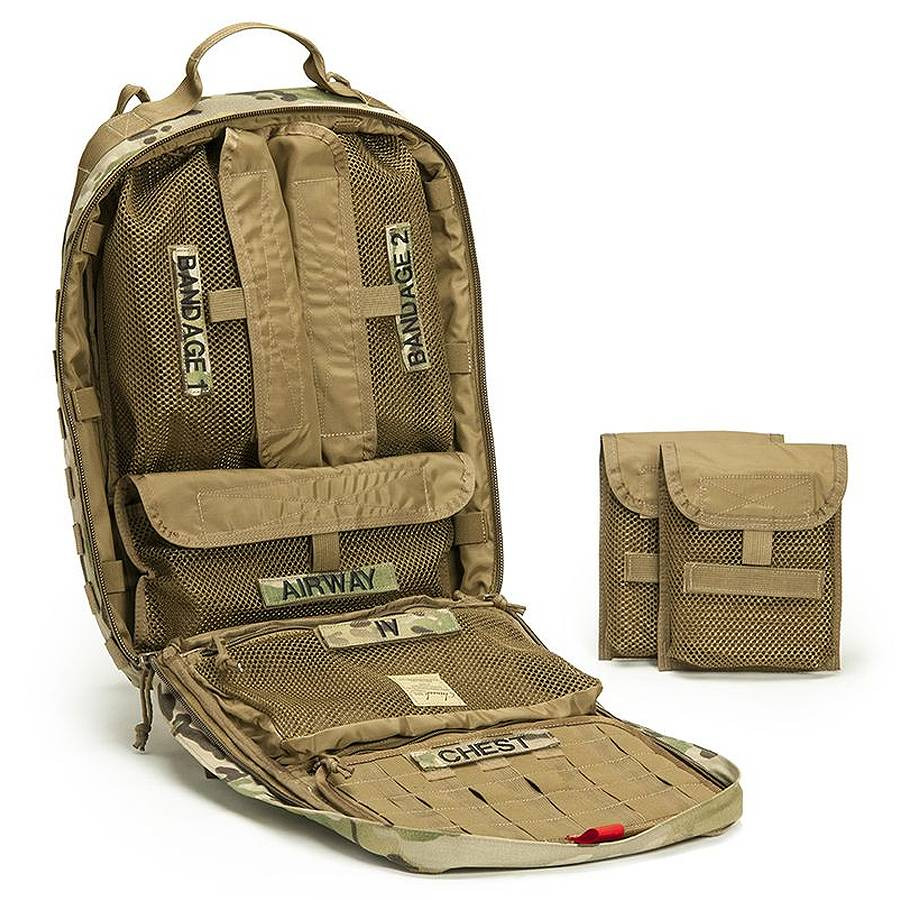
An empty medical bag can include organization components without including medical supplies. Check both lists before purchasing.
If you want to add a focused group of supplies, medical modules offer another purchasing path. Confirm the particular module’s contents and its dimensions before planning to place it in a bag. A modular layout does not establish that every module will fit every carrier.
Match carry and storage to where the bag will be used
Think about the bag’s normal location and how often it will move.

Carried by one person: Compare the loaded weight, strap arrangement, mounting method, and interference with other equipment. A small pouch and a backpack serve different carry needs, even when both hold medical supplies.
Staged in a vehicle: Check the actual storage space, how the bag will be secured, and whether it can be removed and opened easily. Follow the storage requirements for the contents; a carrier alone does not make every vehicle environment suitable.
Stored in a facility: Consider visibility, labeling, placement, and whether users can open the bag or case in the available space.
Moved between locations by a team: Look at handles, straps, removable organization, and how consistently the contents can be laid out across multiple bags.
Also review the product’s material, closure, and manufacturer cleaning guidance. For shared or repeatedly deployed bags, consider whether compartments, removable organizers, and surfaces can be inspected, cleaned as directed, and restocked without losing the intended layout. If water exposure or impact protection matters, rely on the specific manufacturer’s documented ratings and instructions. A tactical appearance or hard shell does not establish a particular protection rating.
Compare pouches, bags, backpacks, and cases
Start with the form factor that matches the carry or storage job, then compare individual products. The three linked examples below are sold without medical supplies; confirm the selected product’s dimensions, carry options, and included organizers.

| Form factor | A useful starting point when | What to check |
|---|---|---|
| Medical pouch Example: Individual Operator Pouch |
You need a compact carrier for a focused inventory or attachment to other equipment | Usable space, mounting method, opening, and included organizers |
| Hand-carried medical bag Example: Home & Vehicle Bag |
You expect to carry the inventory by its handles and set it down for access | Loaded weight, opening footprint, compartments, and strap options |
| Medical backpack or medic pack Example: Medical Operator Pack |
You expect to carry the inventory on your back between locations | Loaded fit, strap system, opening layout, and access to internal groups |
| Protective case Example: Pelican iM2200 Storm Case |
You need a case format for storage or transport | Interior dimensions, inserts, handling, and documented protection ratings |
These are starting points, not universal assignments. A vehicle-based system might use a bag, backpack, or case depending on its contents, storage space, and how it is moved.
Explore medical bags, packs, and cases once you have identified the format and organization you need.
Decide between an empty carrier and a complete medical kit
The carrier’s shape does not tell you whether medical supplies are included. A pouch, bag, backpack, or case may be sold empty or as part of a stocked configuration.
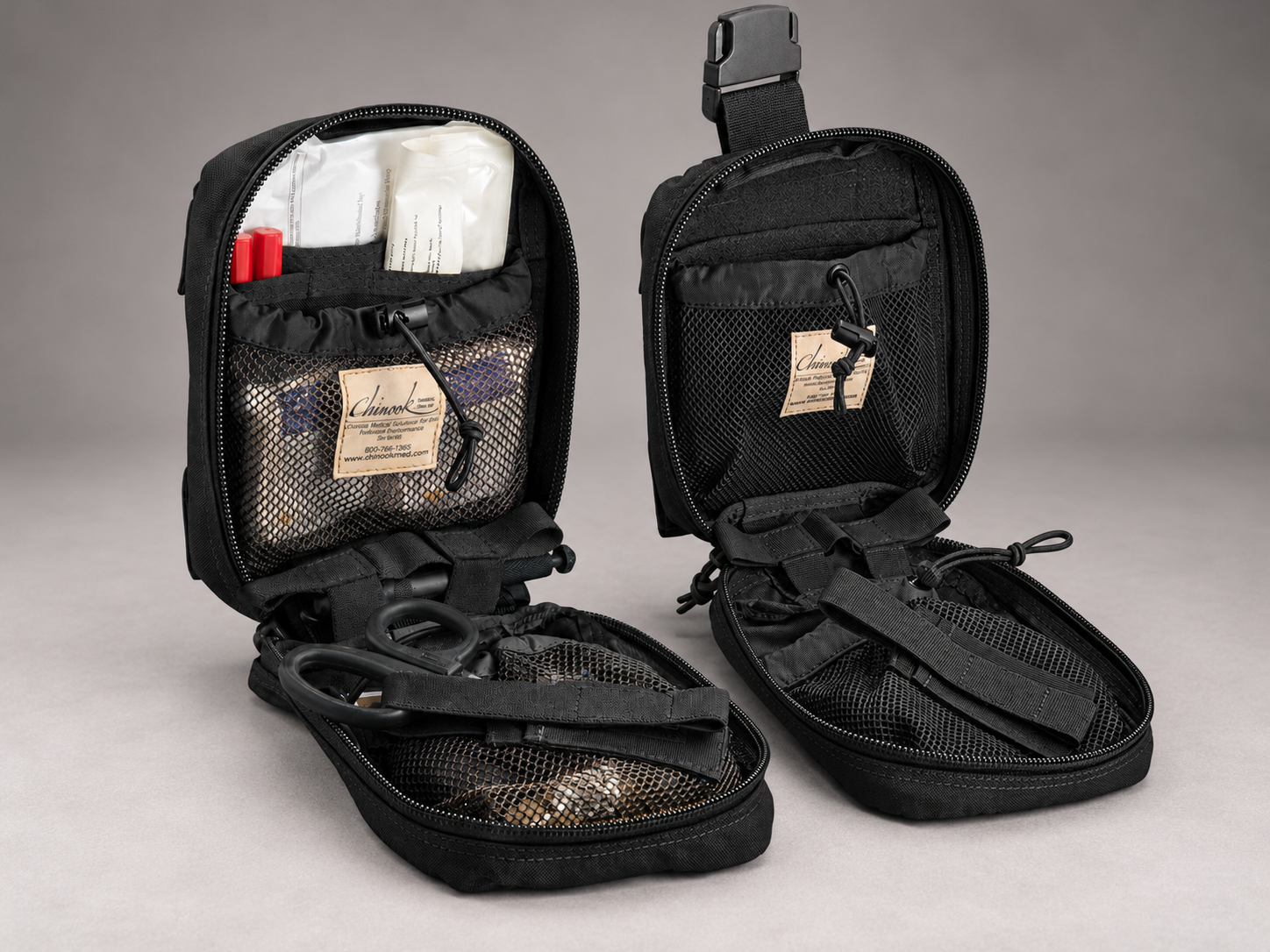
| Purchase type | What you are buying | What to confirm |
|---|---|---|
| Empty carrier or pack only | The bag, pouch, pack, or case, plus any organization components specifically listed | Medical supplies are excluded; confirm which inserts, pouches, or accessories are included |
| Complete medical kit | A carrier and the medical contents listed for the selected kit configuration | Exact contents, quantities, variant differences, and any purchasing requirements |
| Refill or contents only | The supplies listed for that refill configuration | Whether the carrier is excluded and which existing configuration the refill supports |
Choose an empty carrier when you already have an appropriate inventory or need a platform for your own configuration. Choose a complete medical kit when you want the carrier and its defined contents together.
For example, Chinook’s Individual Operator Pouch (01273) is sold without medical supplies. Complete Individual Operator Kit (01274) configurations pair that carrier with the listed medical contents. The kit page also offers “Refill — Contents Only” options without the pouch, so check the selected configuration and contents list before ordering.
Read the contents list and selected option, even when a product photo shows supplies inside. “Complete” describes the listed configuration; it does not mean the kit is appropriate for every user or setting.
Buying for a team, fleet, or multiple locations
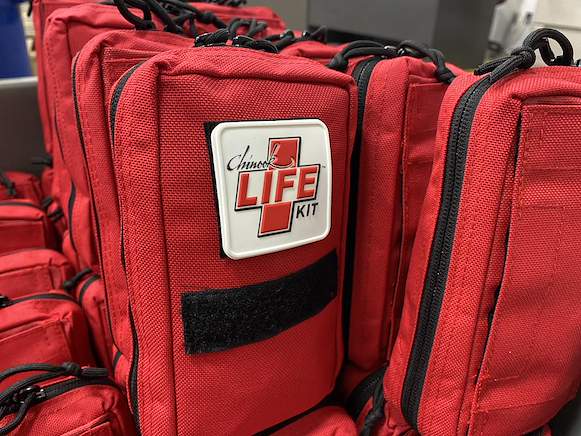
When you are buying more than one carrier, consider how the system will be repeated across users or locations.
Define the deployment unit first: one per person, vehicle, room, or team. Then identify which parts of the setup should remain consistent and where different requirements call for another size or format.
A useful purchasing brief includes:
- The number of people, vehicles, or locations being equipped.
- The intended inventory, or whether a complete kit is needed.
- Carry, mounting, storage, and labeling requirements.
- Any configuration differences between users or locations.
- The needed-by date and any rollout phases.
Before committing to a rollout, confirm the selected configuration, availability, and lead time. Chinook’s organizational purchasing and quote guidance explains the cart-to-Sales and direct-email paths for getting help.
Tell Us What You’re Trying to Equip — share the brief above so the discussion starts with your requirements.
Common questions about medical bags and packs
What size medical bag do I need?
Start with your intended inventory in its packaging, including organizers and the largest equipment. Compare that layout with usable compartment dimensions, then consider loaded weight and access. A capacity figure alone cannot tell you whether the contents will fit in the way you need.
Do medical bags come with supplies?
It depends on the product. Chinook’s medical bags and packs include carrier-only options, while complete medical kits include the supplies listed for the selected configuration. Always check the included-components list and selected SKU—product photos alone may not show exactly what comes with an order.
Can I use a regular backpack for medical supplies?
Yes, if it provides enough usable space, practical access, secure organization, and appropriate storage for your intended supplies. If you want more structured organization inside a backpack you already own, Chinook’s Medical Panel Insert Bag offers removable pouches and panels that can be arranged vertically for a backpack or horizontally for a messenger bag. It is sold without medical supplies; check the insert dimensions and your backpack’s interior space and opening before purchasing.
Can I put a medical module in any bag?
Chinook offers compact, low-profile medical module configurations intended to help organize focused groups of supplies within a larger kit or carrier. But fit is not universal: compare the specific module’s dimensions with the bag’s usable interior space and opening, and verify any mounting or attachment requirements before purchasing.
Find the right next step
Once you know what needs to fit, how you want to access it, and where it will be carried or stored, the buying path becomes clearer.
Need a carrier for your existing supplies?
- Need a carrier with a defined supply configuration? Shop Complete Medical Kits.
- Need a focused addition to an existing setup? Browse Medical Modules.
- Equipping several people or locations? Tell Us What You’re Trying to Equip.