
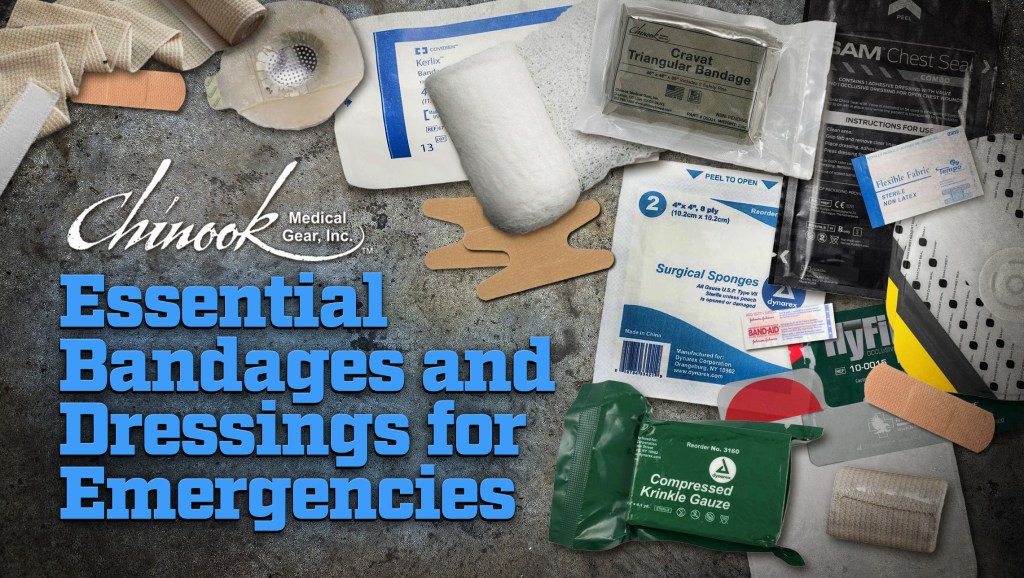
When every second counts, having the right emergency wound care supplies on hand can be the difference between life and death. In Essential Bandages and Dressings for Emergencies, we highlight the most critical tools every first responder, EMT, paramedic, and tactical medic should know, carry, and trust in the field.
A fully equipped trauma kit is more than just a recommendation—it’s a necessity. Whether you’re managing a minor cut or controlling a life-threatening hemorrhage, Chinook Medical Gear offers durable, field-tested bandages and dressings designed for pre-hospital care, combat medicine, and remote environments. Stay prepared, stay equipped, and know your gear.
Why Quality Wound Care Supplies Matter
In emergency scenarios, the effectiveness of your medical supplies can directly impact patient outcomes. Chinook’s wound care solutions are engineered for bleeding control, wound protection, and trauma care, giving medics the confidence to respond quickly and effectively.
From combat gauze and pressure dressings to occlusive seals and sterile gauze pads, every product is designed with the end user in mind—durable, compact, and easy to deploy under pressure.
What’s in Chinook’s Bandages & Dressings Lineup?
Chinook Medical Gear offers a comprehensive selection of wound care supplies tailored for:
- EMS and First Responders
- Military Medics
- Tactical and Austere Medical Teams
- Wilderness and Remote Care Providers
Key products include:
- Hemostatic Dressings: Utilize advanced materials to promote rapid clotting, essential for controlling severe bleeding.
- Compression Bandages: Provide sustained pressure to control hemorrhage and support injured limbs.
- Adhesive and Non-Adhesive Dressings: Offer protection and absorb exudate from wounds.
- Burn Dressings: Specifically formulated to cool and protect burn injuries.
- Trauma Pads and Gauze: Used for wound packing and as a primary dressing.
Each item is selected to ensure maximum versatility and performance in critical care situations.
Choose the Right Product for the Right Injury
Not all injuries are the same—and neither are wound care products. Medical Supplies 101 means understanding when to use a pressure bandage versus a hemostatic agent, or when a chest seal could mean the difference between life and death. With Chinook’s expertly curated selection, you can build or enhance your trauma kit with confidence.
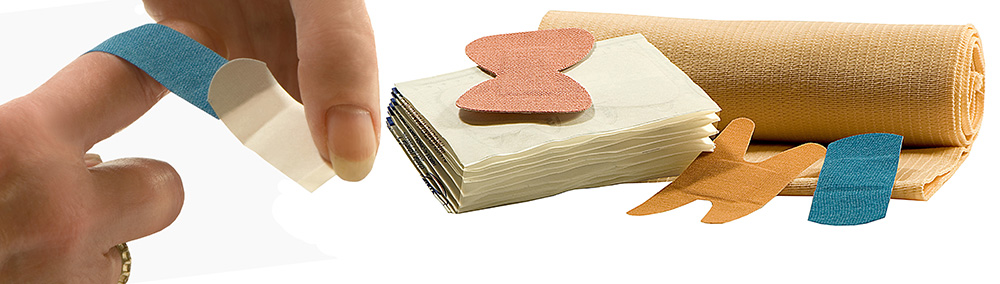
Bandage or Dressing: Which one do I use?
BANDAGE: A bandage is the material used to secure a dressing in place, provide support or compression, or immobilize an injured area.
It does not typically come into direct contact with the wound (unless it’s a combination product like an Israeli bandage).
Functions of bandages:
- Hold dressings over wounds
- Apply pressure to control bleeding
- Support sprains or fractures
- Restrict movement of injured limbs
Examples of bandages:
- Elastic (ACE) bandages
- Roller gauze bandages
- Compression bandages
- Triangular bandages
DRESSING: A dressing is a sterile or non-sterile material applied directly to a wound.
Its primary functions include:
- Protecting the wound from infection
- Absorbing exudate (wound fluids)
- Promoting healing by maintaining a moist environment
- Sometimes delivering medication (like antibiotics or hydrogels)
Examples of dressings:
- Gauze pads
- Hydrogel sheets
- Non-adherent dressings (e.g., Telfa)
- Hemostatic dressings (e.g., QuikClot)

Types of Wounds and Appropriate Bandage Applications
1. Severe Hemorrhage (Arterial or Venous Bleeding)
Recommended Bandages:
- Hemostatic Dressings: Products like QuikClot Combat Gauze are designed to promote rapid clotting, essential for controlling severe bleeding in cases where traditional methods are insufficient.
- Compression Bandages: Israeli-style bandages provide direct pressure and a pressure bar to enhance clotting.
Application:
Apply directly to the wound, ensuring firm pressure. For Hemostatic Dressings, follow manufacturer instructions regarding application time and removal.
2. Minor to Moderate Wounds (Lacerations, Abrasions, Skin Tears)
Recommended Bandages:
- Adhesive Bandages/Sheer Strips: Ideal for small cuts and abrasions.
- Sterile Gauze Pads: Used with adhesive or conforming bandages for larger wounds.
Application:
Clean the wound thoroughly before applying the dressing. For skin tears, gently reposition the skin flap if possible and secure with a non-adherent dressing.
3. Burn Injuries
Recommended Bandages:
- Burn Dressings: Specifically designed to cool and protect burn injuries, preventing infection and alleviating pain.
Application:
Cover the burn area with the dressing, ensuring it is sterile and non-stick. Avoid using ice or very cold water, as this can cause further tissue damage.
- Burn Dressings: Specifically designed to cool and protect burn injuries, preventing infection and alleviating pain.
4. Fractures and Sprains
Recommended Bandages:
Elastic Bandages: Provide compression and support to injured limbs.
- Conforming Bandages: Ideal for securing dressings in place, particularly on limbs.
Application:
Apply the bandage snugly to the injured area, ensuring it is not too tight to avoid compromising circulation.
5. Chest and Abdominal Wounds
Recommended Bandages:
Occlusive Dressings: Used for penetrating chest wounds to prevent air from entering the chest cavity, which can cause a pneumothorax.
- Application:
Apply the chest seal over the wound after the patient exhales, ensuring a tight seal to prevent air entry.

Best Practices for Bandage Application
- Assessment: Evaluate the severity and type of wound to determine the appropriate dressing.
- Preparation: Ensure all bandages and dressings are sterile and within their expiration date.
- Application: Follow manufacturer instructions for each product. For hemostatic dressings, apply direct pressure and maintain until bleeding is controlled.
- Monitoring: Regularly assess the wound and dressing for signs of infection or complications.
- Documentation: Record the type of dressing applied, time of application, and any changes in the patient’s condition.
Summarizing Bandages and Dressings.
Feature | Bandage | Dressing |
Direct wound contact | No (except combo products) | Yes |
Purpose | Secure, support, compress | Protect, absorb, promote healing |
Examples | ACE wrap, roller gauze, compression wrap | Gauze pad, hydrogel, QuikClot |
In practice, both dressings and bandages are often used together to effectively manage wounds. For instance, a dressing may be applied directly to a wound to protect it and absorb exudate, while a bandage is used to secure the dressing in place and provide additional support or compression.
By understanding the distinct roles of dressings and bandages, healthcare providers can ensure optimal wound care and improve patient outcomes.
Wrap it Up with Bandages and Dressings
A well-equipped trauma kit is essential for first responders to provide effective care in emergency situations. Understanding the different types of bandages and dressings, along with their appropriate applications, ensures that EMTs can manage various wounds and injuries efficiently. Regular training and familiarization with these products are crucial for optimal patient outcomes.